
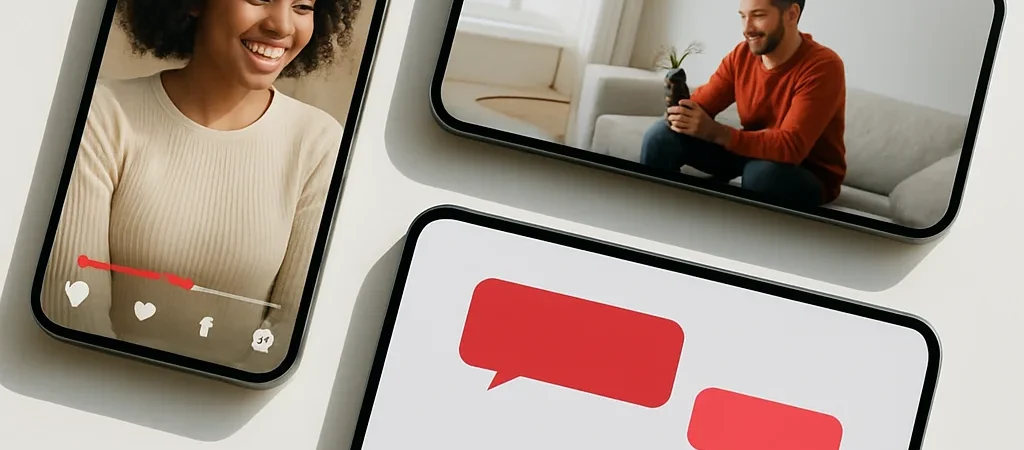
A topic appears as a quick vertical clip, then as a longer explanation, then as a post surrounded by reactions and conversation. It may be the same story, but each feed frames it differently. Comparing those frames is a useful way to understand what is getting attention—and why.
The format sets expectations
TikTok often puts short, personal video front and center, while YouTube gives room for both brief clips and longer watch-throughs. Facebook can place a video inside a broader stream of posts and comments. These are broad format differences, not rules about every creator or every feed.
Compare what each adds
A fast clip may show the moment people are reacting to, while a longer video can supply background or a creator’s reasoning. Comments and shares can reveal how viewers are discussing the subject, but they do not establish that every claim in a post is accurate. Treat each view as one piece of context, not the whole picture.
Keep the source in view
If the same topic appears across Fuerte’s TikTok, YouTube, and Facebook feeds, notice what changes between versions before drawing a conclusion. Check who made the original post and whether key details are supported elsewhere. Social discovery is a strong starting point; a little comparison makes it more useful.